
MTB World Championships generated millions in economic impact

The Union Cycliste Internationale (UCI) released an economic impact study for the 2025 Mountain Bike World Championships, which took place in the region of Valais, Switzerland across 8 venues. The event generated an estimated 19.3 million Swiss Francs (about $24 million) gross value added. This is equivalent to supporting 228 Full-Time Equivalent jobs in Valais.
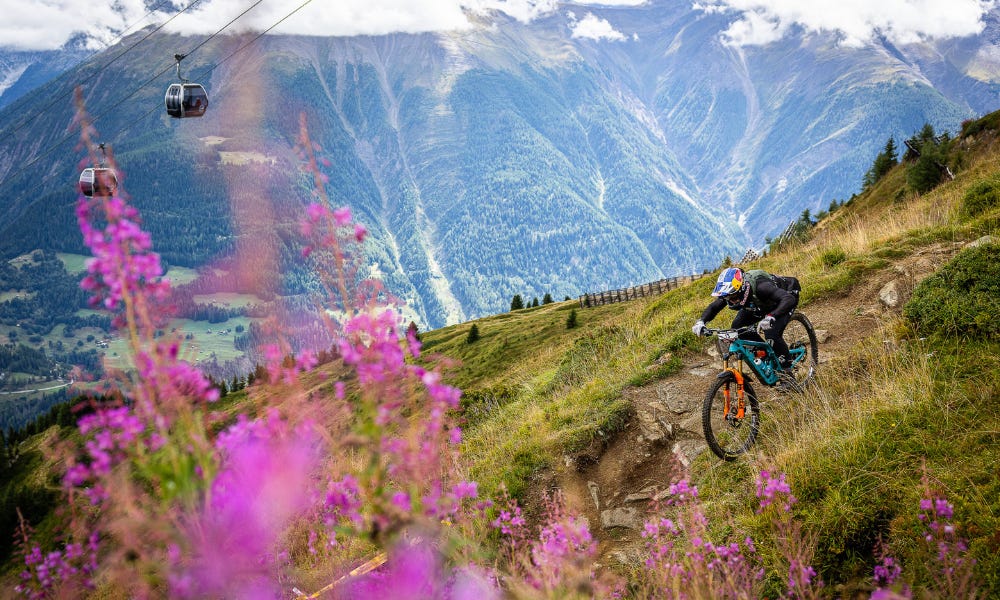
The Swiss World Championships attracted an estimated 48,500 spectators, who watched 1,135 competitors hailing from 60 countries. More than 500 national federation support staff attended the event, along with 353 accredited media workers. Digital media accounted for 83 million impressions, 104 million video views, and a television audience of 57.3 million.
Sixty five percent of spectators traveled to the races from outside of Valais and spent CHF 6 million during their stay. Naturally, the most international spectators traveled from France, Germany, and the Netherlands, followed by Great Britain and the United States to round out the podium. Accommodation accounted for the most amount of money spent by this group, followed by food and drink, and transportation.
Media travel expenses accounted for CHF 5 million, while CHF 8.1 million came from event organization.
Of the CHF 19.3 million gross value added (GVA), CHF 9.6m was from direct GVA, mainly spectator spending and event production. This direct impact generated a further CHF 4.9 million indirectly through the demand created on businesses’ supply chains. A further CHF 4.9 million of induced GVA was then supported through the spending of employment income generated because of these direct and indirect impacts.
Event production contributed to 43 percent of the total GVA impact. This is notably higher than the typical share observed at previous UCI events and can be attributed to two week duration of the event and the greater logistical demands of operating across eight distinct venues.
The report also broke down sustainability metrics, with 90 percent of energy use coming from the local grid and renewable sources. In addition, 99 percent of tableware was reusable and biodegradable and 100 percent of competition sites were cleaned up and restored after the event. Twenty seven percent of food options were vegetarian.
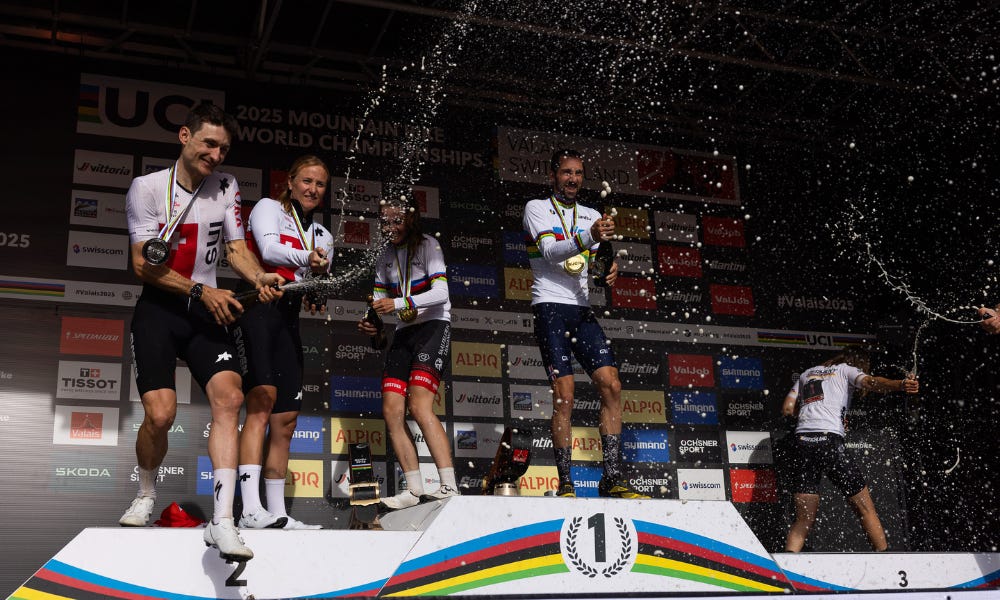
The World Championships also had a positive impact on cycling culture and development in Valais, from school programs to high performance centers. Through these efforts, the popularity of women’s cycling increased by 45 percent. There are also more than 1,000 youth members in Valais cycling clubs, more than double the figure reported just five years ago. Five thousand school children participated in on-site cycling lessons, and 3,000 children visited the World Championships events.
The numbers are further evidence that elite sporting events are good for business and local economies. The Swiss event, along with other high-profile cycling events, spur on regions to host additional events such as World Cup races in preparation for the World Championships. That’s good news for locations like Durango, Colorado, who are bringing the World Championships back stateside in 2030.